
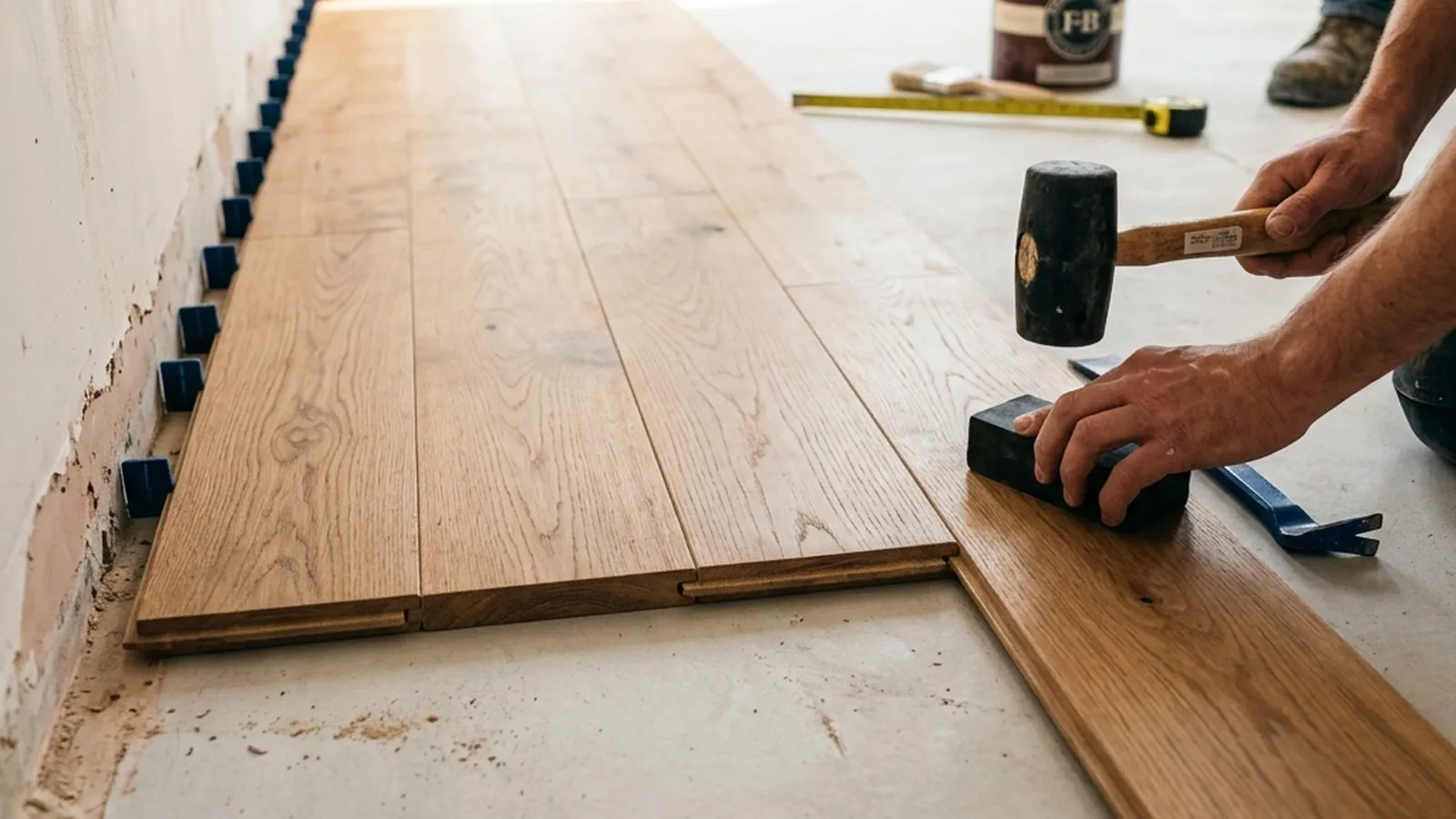
A flooring budget needs three separate prices: the material, preparation and installation. A low material price per square metre can still produce a high total if the existing floor needs removal or levelling. Request a measured, itemised quote before ordering.
Build your quote around the room
| Quote item | Detail to record |
|---|---|
| Area | Measured floor area and separately stated wastage allowance |
| Material | Exact product, grade, finish and pack coverage |
| Preparation | Removal, disposal, moisture testing and levelling |
| Installation | Labour, adhesive or underlay and fitting method |
| Edges | Thresholds, trims, skirting and door adjustments |
| Total | VAT, delivery, exclusions and payment stages |
Use the same specification when approaching each fitter. A quote for a cleared room is not equivalent to one that includes moving furniture and removing tiles. Ask how unforeseen subfloor defects will be agreed and priced.
Choose a material for the intended use
For a bathroom or kitchen, ask the manufacturer about moisture exposure and the complete installation system. The suitability of a plank or tile does not establish that the floor underneath is waterproof. For busy entrances, compare wear resistance and repair options. For bedrooms, consider sound and comfort as well as purchase cost.
If there is underfloor heating, get written compatibility information for the product, adhesive and underlay. Check the manufacturer’s temperature and commissioning instructions with the installer. The underfloor-heating guide lists other budget items.
Inspect the subfloor before committing
Ask who is responsible for checking dryness, flatness and structural condition. Confirm whether the preparation allowance is fixed or provisional, and whether a return visit or drying period affects the programme. In an older home, coordinate any floor-insulation work before the new finish is laid.
Compare the total, not just the unit price
Write your budget as measured quantity multiplied by the quoted unit rate, plus preparation, fitting, delivery and finishing. Keep optional work separate. This is a project calculation using your quote, not a national average or a promise of the final bill.
The CCPC recommends written quotes and clear records. Agree the specification, payment stages and completion arrangements before work starts.
Plan the next step
Measure the rooms, choose a shortlist of products and arrange a site visit. If several trades are involved, put flooring into the whole-house renovation plan so plastering, heating and drying can be sequenced before fitting.