
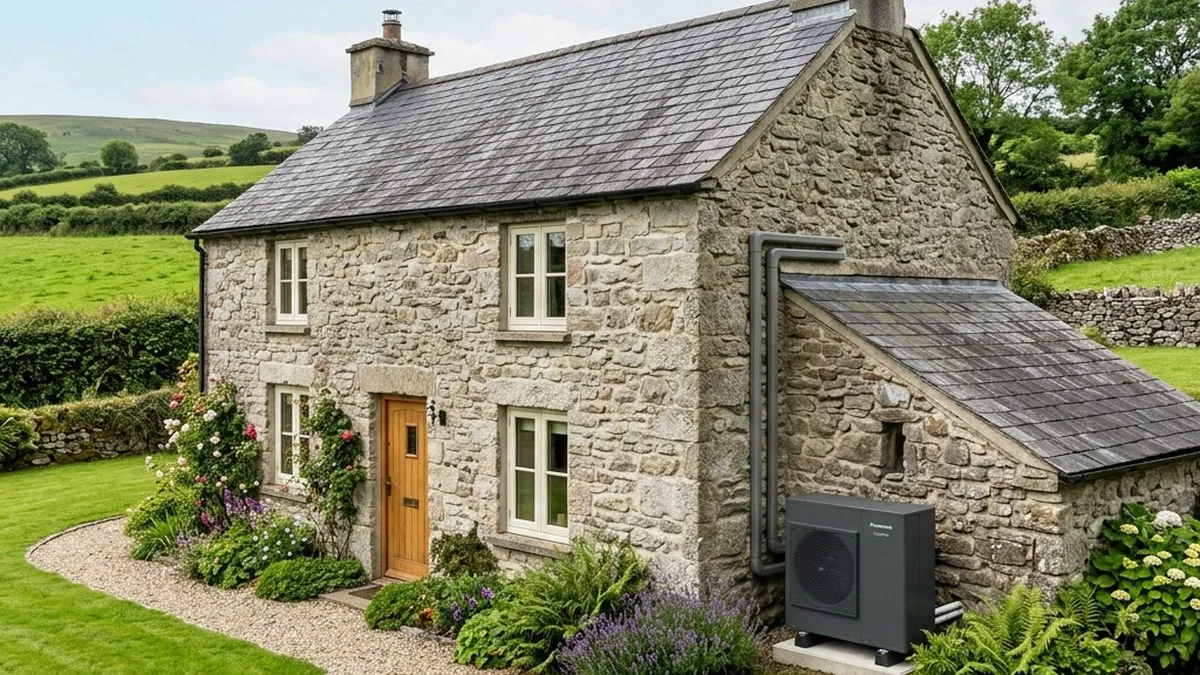
An older home can suit a heat pump, but age alone does not tell you whether the heating system will work efficiently. Start with a heat-loss assessment and an agreed design before choosing equipment or estimating savings.
Start with the building, not the heat pump
Ask your assessor to identify the insulation, ventilation and heating changes needed for your particular house. A stone cottage, a cavity-wall semi and a house with later extensions can require very different work. Treat damp or structural defects as separate survey questions; covering a problem with insulation does not resolve its cause.
SEAI’s installation guidance explains the assessment and contractor route. Do not use a BER letter alone as a guarantee of suitability. For the current assessment and self-declaration rules, use our heat-pump grant guide.
Ask for a room-by-room heating design
Bring these questions to the installer:
- What heat output does each room need on the design winter day?
- What flow temperature will meet that demand?
- Which existing radiators can stay, and which need changing?
- Is cylinder replacement included? Where will the outdoor unit go?
- What electrical and noise checks are included in the survey?
- Who commissions the system, explains the controls and handles servicing?
A radiator’s age or material is not enough to establish its output at a lower water temperature. Ask for the design calculation rather than assuming that an old radiator is either suitable or unsuitable.
Budget for the whole project
Compare quotes for the same scope: assessment, fabric work, ventilation, radiators, cylinder, electrical work, commissioning and making good. Ask each contractor to separate the gross price, grant assumptions and amount you must fund. Stage payments and the timing of a grant payment affect cash flow as well as the final cost.
A qualifying house may receive a heat-pump bundle of up to €12,500 (manual, 2026-09-22). This is a ceiling, not an automatic payment or an installed price. Insulation is assessed under its own grant conditions.
Source: SEAI, source date 22 September 2026 (manually researched)Compare running costs using your own bills
Use the heat-pump versus oil calculator with your annual heat demand, quoted seasonal performance and electricity rate. Try a less favourable performance assumption as well. Simple payback leaves out financing, repairs and future energy-price changes.
Choose the next step
Start with a building survey if condition is uncertain. Otherwise gather your BER, fuel bills and floor plan for an assessor. If you receive a qualifying welfare payment, read the Warmer Homes Scheme guide before commissioning work yourself. The insulation hub explains the main fabric options.