
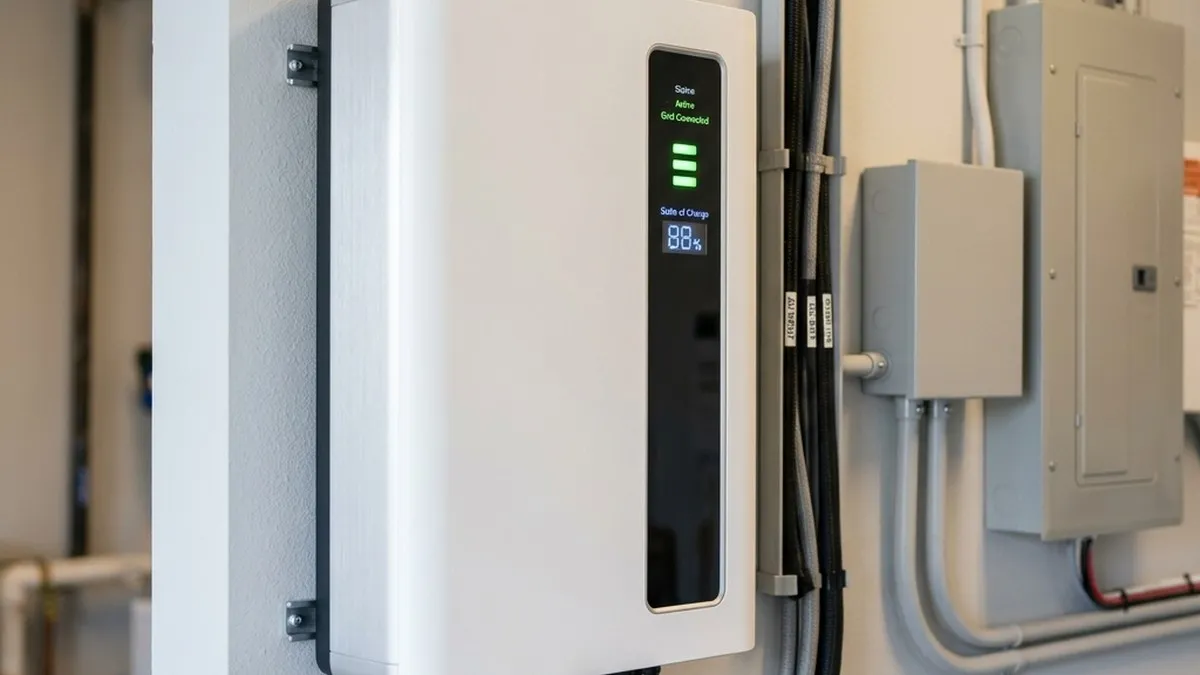
A battery can increase the solar electricity you use at home, but its financial value depends on the extra installed cost, charging losses and export income you give up. Ask for solar-only and solar-plus-battery quotes with the same panel specification.
Calculate the extra value of storage
For energy that would otherwise be exported, compare:
Value per kWh charged = import price × round-trip efficiency − export price.
Multiply that margin by the energy the battery can realistically shift in a year. Account for usable capacity, winter generation, evening demand, degradation and warranty limits. Do not assume the battery fills from solar every day.
Grid charging uses a different comparison: the avoided import cost after losses minus the cheap-period charging cost. Include any higher day rates and standing charges when comparing tariffs.
Our solar calculator estimates generation, self-consumption and export. It does not model battery cycling or time-of-use dispatch, so its result alone cannot establish a battery payback period.
Compare the specifications
- Usable capacity: energy you can actually discharge, rather than the headline storage capacity.
- Charge and discharge power: whether it can serve the loads you intend to shift.
- Compatibility: existing inverter, monitoring, metering and warranty requirements.
- Warranty: years, cycles or throughput limit and retained-capacity conditions.
- Backup: ask whether backup hardware and dedicated circuits are included. Solar panels and a battery do not automatically keep the whole house running during an outage.
- Installation: location, access, electrical works, commissioning and future expansion.
Grant and next steps
Read the SEAI domestic solar grant conditions and its homeowner solar PV guide. Request the battery cost as a separate quote item and compare it with the calculated annual benefit and the value you place on backup.
Then review solar costs and export payments using your own tariff and consumption records.